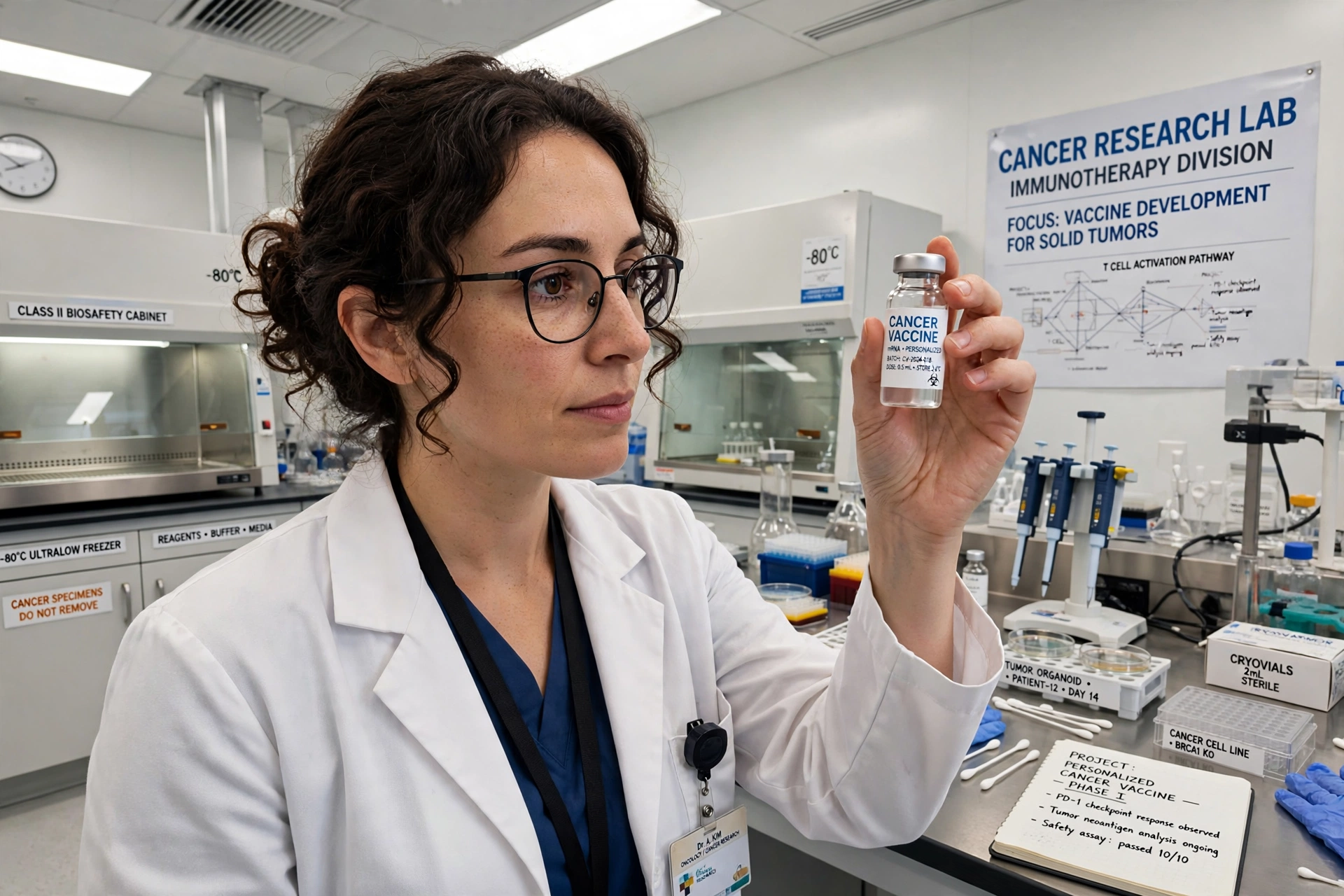
Women living with ovarian cancer are being offered a note of careful optimism this week, after scientists reported encouraging early results for a personalised vaccine designed around each patient’s own tumour. The phase 1 trial, published in Nature Medicine, tested a treatment called NeoVax alongside the immunotherapy drug nivolumab in people with platinum-sensitive ovarian cancer. The researchers’ main conclusion was a measured one: making and giving the vaccine was feasible, and its safety profile was acceptable. Between health headlines, readers catching up on lighter fare may enjoy the new Netflix trailer turning heads this week.
How a personalised vaccine works
The idea begins with sequencing. Doctors analyse a sample of the patient’s tumour and look for neoantigens, which are abnormal protein fragments produced by cancer mutations and found nowhere else in the healthy body. Because these fragments are unique to that individual tumour, a vaccine built from them is, in effect, tailored clothing for the immune system: it teaches immune cells exactly which targets to hunt. NeoVax is manufactured for one person at a time, a process that takes weeks, which is precisely why demonstrating that the logistics work in real clinics matters so much.
Why nivolumab was added
Vaccines alone can struggle against tumours that have learned to switch immune cells off. Nivolumab belongs to a family of drugs known as checkpoint inhibitors, which release one of those brakes and allow awakened immune cells to keep attacking. The trial’s logic was to pair the two approaches: the vaccine would point the immune system at the right targets, and nivolumab would help it stay in the fight. Ovarian cancer has historically responded less dramatically to checkpoint drugs than some other cancers, so any combination that can be given safely earns serious attention from specialists.
What phase 1 can and cannot tell us
It is essential to be clear about what this study was designed to do. Phase 1 trials are small and focus first on safety, dosing and practicality, not on proving that a treatment extends life. The report therefore does not show that NeoVax cures ovarian cancer or even that it definitely delays its return. What it does show is that patients could receive the combination without unacceptable side effects, and that the vaccine provoked the kinds of immune responses researchers hoped to see. Those are the green lights needed before bigger, controlled trials can begin.
Why ovarian cancer needs new ideas
Ovarian cancer earns its difficult reputation honestly. It is frequently discovered late, it often responds to chemotherapy at first, and then, in far too many cases, it finds its way back. That pattern of response and return is exactly why maintenance treatments, therapies designed to hold the disease down after chemotherapy, attract such intense research interest. A vaccine that could train lasting immune surveillance would suit that role beautifully, which is why specialists have followed the neoantigen field for years despite its manufacturing headaches. The women who volunteered for this first trial, knowing it was unlikely to help them personally, have given the next generation of patients a genuine gift: proof that the pathway works.
A word on the science of hope
Researchers are careful people, and their careful language in this report deserves respect rather than translation into hype. Feasible means the treatment could be made and delivered as designed. Acceptable safety means the side effects seen were within the bounds doctors consider manageable for patients in this situation. Neither phrase means the vaccine works against the cancer itself, and the authors say so plainly. Readers who keep those definitions in mind will be able to follow the coming trials with clear eyes, celebrating real progress when it arrives and recognising, just as quickly, when a headline has run ahead of the evidence it claims to describe.
The road from here
Larger randomised studies will now be needed to discover whether the vaccine genuinely improves outcomes, and for which patients it helps most. Researchers will also want to shorten manufacturing time, since personalised treatments are expensive and slow to produce, and to understand why some immune systems respond more strongly than others. For women currently in treatment, oncologists stress that standard care should not change on the basis of an early trial. Still, in a disease where progress has often been painfully slow, a safe first step towards truly personal medicine is worth welcoming.