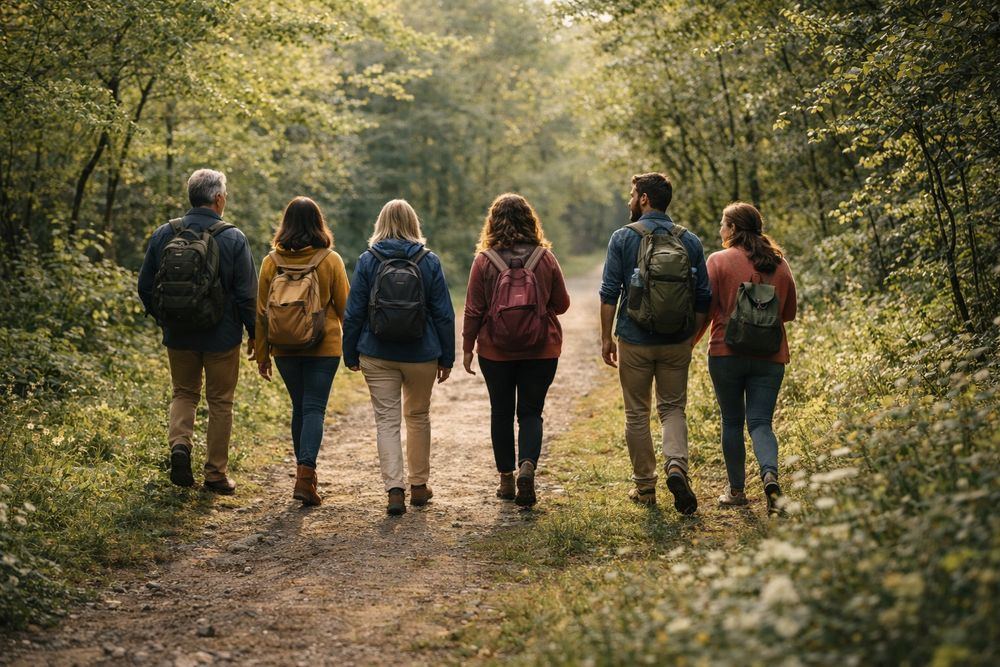
A short walk among trees does something a walk along a busy road does not, and psychologists are getting better at measuring the difference. Studies comparing the two routes find that people returning from green spaces show lower rumination, the repetitive negative thinking linked with anxiety and low mood, along with modest improvements in working memory. The effect does not require wilderness. A park, a canal path, a tree-lined street or even a large garden appears to deliver a meaningful share of the benefit, which makes the finding useful for city dwellers rather than only committed hikers.
Attention That Restores Instead of Drains
One explanation, known as attention restoration theory, holds that natural scenes engage the mind gently. Leaves, water and birdsong hold interest without demanding decisions, giving the brain’s directed attention system a chance to recover from the effort of screens, traffic and conversation. Urban environments, by contrast, constantly call for vigilance. Research summarised by journals such as Nature has associated regular green exercise with reduced stress hormones and improved self-reported mood, with benefits appearing after as little as twenty minutes. Participants also tend to underestimate how much better they will feel, which is one reason the habit is hard to start and easy to keep.
Memory, Mood and the Phone in Your Pocket
The memory findings are among the most consistent. In repeated experiments, people who walked in nature recalled word lists and completed backwards-counting tasks more accurately than people who walked the same distance beside traffic. Psychologists suspect that a calmer mind simply encodes more. The effect shrinks, however, when walkers scroll their phones throughout, because the attention system never gets its rest. Leaving the phone in a pocket, or using it only for a photograph, seems to be part of the prescription rather than an optional extra.
Making a Small Dose Routine
Therapists who recommend nature walks usually frame them as a dose: a regular, modest amount beats an occasional expedition. A lunchtime loop of a nearby park, a weekend walk with a friend, or a deliberate detour through greener streets on the way home all count. Combining the walk with social contact or gentle exercise stacks several protective factors at once. None of this replaces professional help for serious mental health difficulties, and psychologists are careful to say so. But as an accessible, side-effect-free support for mood and memory, the humble green walk has earned its place in the evidence base.
The most encouraging finding may be how ordinary the intervention is. No app, subscription or special clothing is required, and the benefits begin at distances most people can manage on an ordinary weekday. For people who find the gym forbidding or meditation frustrating, a green walk offers a rare combination: it is gentle enough to sustain, pleasant enough to repeat, and supported by a growing body of psychological evidence rather than fashion or anecdote alone.