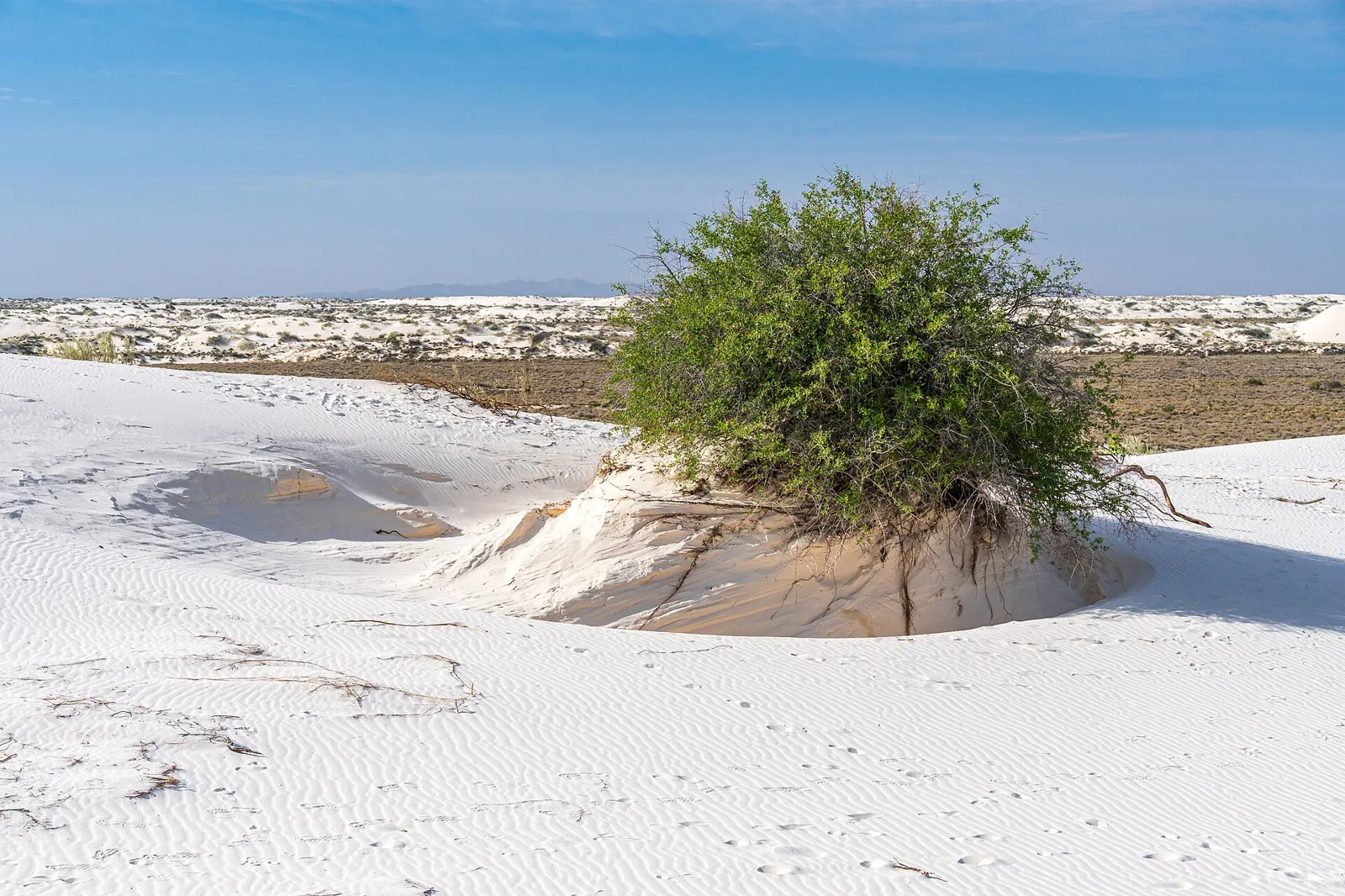
Imagine raising a family beside a great lake, and watching that lake change its mind. That, in essence, is the new picture from White Sands, New Mexico, where research published in Science Advances shows that the people who left the site’s celebrated footprints lived through abrupt environmental change during the Last Glacial Maximum.
The footprints, human tracks preserved in gypsum mud beside ancient Lake Otero, already proved that families were present in Ice Age North America far earlier than textbooks once allowed. The new work examines the lakebed sediments themselves, dating layer after layer to reconstruct the setting those families depended on for water, food and travel.
A lake that flipped, not faded
The sediment record does not show a lake slowly and politely shrinking as the Ice Age waned. It shows distinct states, wetter and drier, fresher and more saline, separated by transitions that were fast in geological terms. Shorelines moved, marshes appeared or vanished, and with them moved the fish, birds, animals and plants that made the basin worth living in.
Scientists dated the layers with radiocarbon measurements on organic material preserved in the mud, then read the chemistry of each layer as a description of the water it settled in. Published in Science Advances, the reconstruction gives the footprints something they lacked: a changing stage, measured on a timeline that overlaps the human one.
Resilience as the real headline
It is tempting to read the story as hardship, and some seasons must have been hard. But the richer reading is resilience. These were communities with deep local knowledge, adjusting camps and hunting grounds as the lake shifted, teaching children a landscape that differed from the one their grandparents described. The tracks include children walking beside adults, ordinary family movement preserved by chance, which makes the adaptation feel human rather than theoretical.
Stories where evidence overturns a tidy assumption travel well with our readers, whether the setting is a New Mexico lakebed or a modern classroom study like Phone-Free Classrooms Help Struggling Students Most, Study Finds.
Why the past speaks to the present
Researchers are measured about modern parallels, but the core lesson is plain: environments can reorganise faster than the people living in them expect, and survival belongs to the adaptable. More coring and finer dating are planned to pin down how fast each flip unfolded and whether neighbouring basins changed in step. For now, White Sands offers a double gift to science: proof of very early Americans, and a detailed portrait of the restless Ice Age world they learned, generation by generation, to call home.
What the footprints add that sediments cannot
Sediment cores describe a lake; footprints describe a Tuesday. The trails at White Sands capture journeys, a child keeping pace with adults, groups crossing to hunt or gather, journeys interrupted and resumed, and they date those journeys to the same demanding period the cores reconstruct. That combination is exceptionally rare in archaeology, where human evidence and environmental evidence usually arrive in separate trenches, dated by separate methods, and argued over by separate specialists.
It also disciplines interpretation. Knowing that people were demonstrably present while the lake flipped between states rules out the easy story that harsh change simply emptied the basin. Presence through change is itself data: it sets a lower bound on the flexibility of the settlement system, the range of resources people could exploit, and the reliability of the knowledge they passed on. The mud, in other words, testifies about the environment, and the tracks testify back about the people.
Preservation gives the site one more advantage researchers intend to exploit: the gypsum chemistry that saved the footprints also protects organic material in the surrounding sediments unusually well. That raises the prospect of recovering seasonal detail, pollen released in particular springs, flood layers from particular storms, far finer than the century-scale resolution that already transformed interpretation. A record that can speak in seasons as well as centuries would let archaeologists ask how individual years of hardship or plenty were distributed within the longer flips, bringing the reconstruction closer to lived experience than deep-time studies usually manage.