For decades, Nollywood built one of the world’s most productive film industries on speed, hustle and stories that felt unmistakably Nigerian. Films moved from VHS tapes to DVDs sold in markets, then to local cinemas and television. What has changed in the past few years is not the storytelling ambition — that was always there — but the route a film takes to its audience. A premiere in Lagos can now be watched the same weekend in London, Toronto, Houston and Johannesburg, legally, in high definition, with subtitles, on a phone.
That shift sounds simple. In practice, it has reshaped budgets, casting, marketing and even the kinds of stories producers are willing to finance.
From Local Shelves to a Global Catalogue
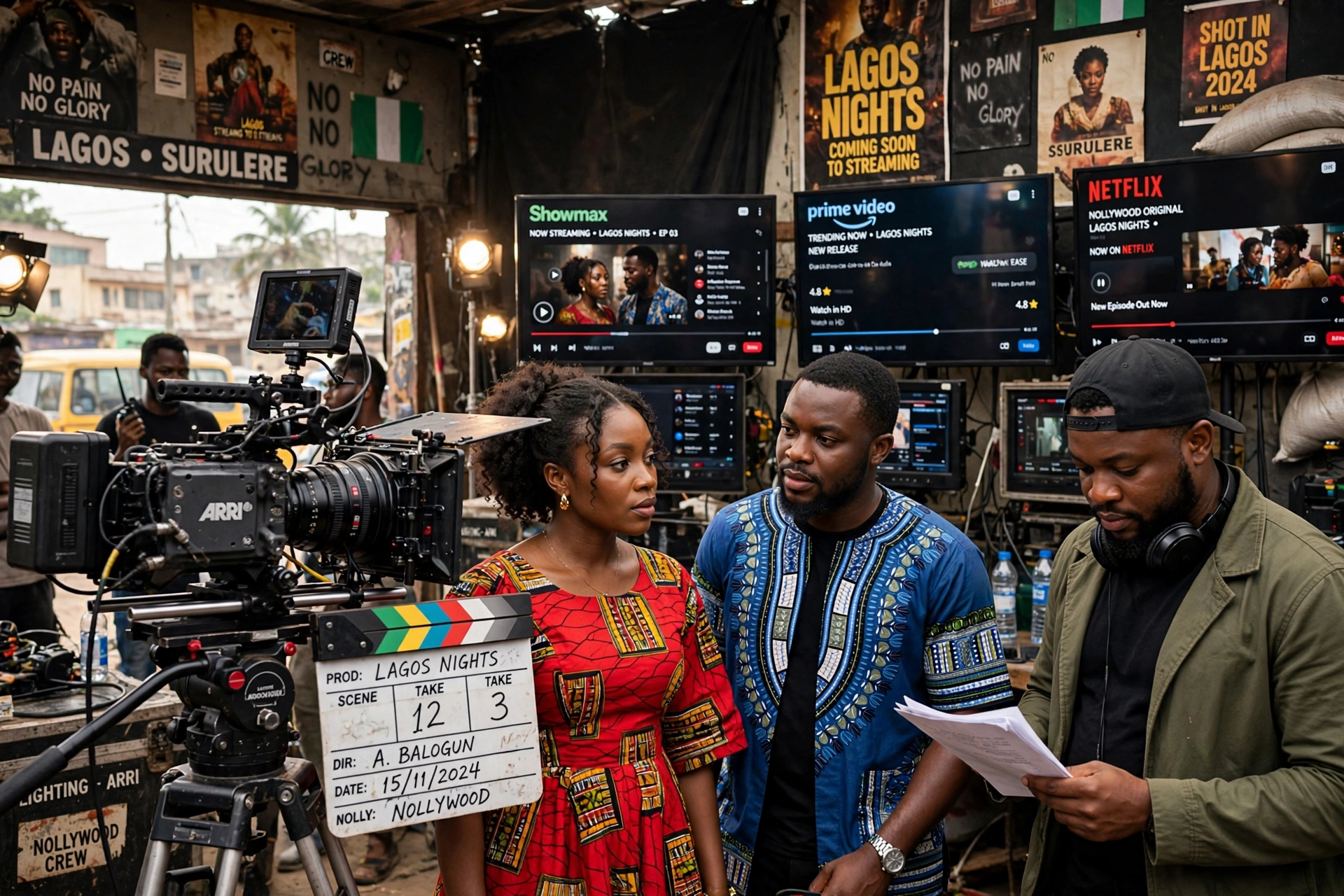
The turning point most often cited is the arrival of major global platforms as buyers and commissioners of Nigerian titles. When a streaming service acquires a film for worldwide release, it solves the oldest Nollywood problem at once: distribution. Instead of negotiating territory by territory or hoping a diaspora audience finds a physical copy, a producer gets a single deal that puts the work in front of subscribers in dozens of countries.
Coverage of Nollywood’s international expansion has tracked how premieres and platform releases have widened that reach, with Nigerian films now launching in major cities and on services used by millions of viewers — see this overview of Nollywood stars’ international achievements and crossovers for examples of that trajectory.
For audiences, the effect is discovery. A viewer who opens an app looking for a thriller may encounter a Lagos crime saga next to titles from Seoul, Madrid and Los Angeles. Algorithms are imperfect guides, but they place Nigerian stories inside a global conversation about what to watch tonight, rather than in a separate, hard-to-find corner.
Bigger Budgets, Higher Expectations
Streaming money has not made every production rich, but it has raised the ceiling for the top tier. Platform commissions and pre-sales tend to require delivery standards — sound, picture, subtitles, clearances — that push budgets towards better locations, longer shoots, stronger post-production and more experienced crews. That investment is visible on screen, and it matters for first-time viewers whose only reference point is other international content on the same service.
It also changes risk. A producer pitching a historical epic, a fantasy rooted in Yoruba mythology or a polished romantic drama can point to comparable titles that travelled well. Stories once considered too local for financiers are reframed: specificity is a selling point. Audiences abroad are not asking Nollywood to sound less Nigerian; the films that cut through tend to be confident about place, language, humour and family dynamics, while being clear enough for a newcomer to follow.
The Diaspora Effect — and Beyond It
The Nigerian diaspora was the natural first audience for streaming Nollywood, and it remains a powerful one. Viewing parties, social media commentary and word of mouth from Nigerians abroad helped prove demand. The newer development is the second audience: viewers with no Nigerian connection who stay because a story is gripping, funny or moving.
That crossover is fragile. It depends on consistent quality, honest marketing and platforms continuing to surface African titles prominently, not bury them. It also depends on creators retaining a fair share of value as deals evolve — a debate now happening openly among filmmakers about ownership, windows and cinema-first strategies.
Cinemas, Streaming and the Hybrid Release
Streaming has not replaced the cinema in Nigeria; it has added a second life — and sometimes a first window — for films. Many producers now plan a hybrid path: a theatrical run that creates buzz and box-office credibility at home, followed by a streaming release that carries the film worldwide. Others go straight to a platform to guarantee reach. Both models can work, and the healthiest sign is that producers have a choice they did not have a generation ago.
Readers following entertainment coverage here can also catch up on our recent stories for more context on the business and culture shaping viewing habits.
What Comes Next
The next phase will be less about a single landmark deal and more about depth: more genres, more first-time directors given real budgets, better writers’ rooms for series, and data that helps — rather than flattens — creative decisions. If streaming has taught Nollywood anything, it is that a local story, told well and delivered professionally, does not need permission to travel. The world was always a possible audience. Now, finally, the delivery system matches the ambition.