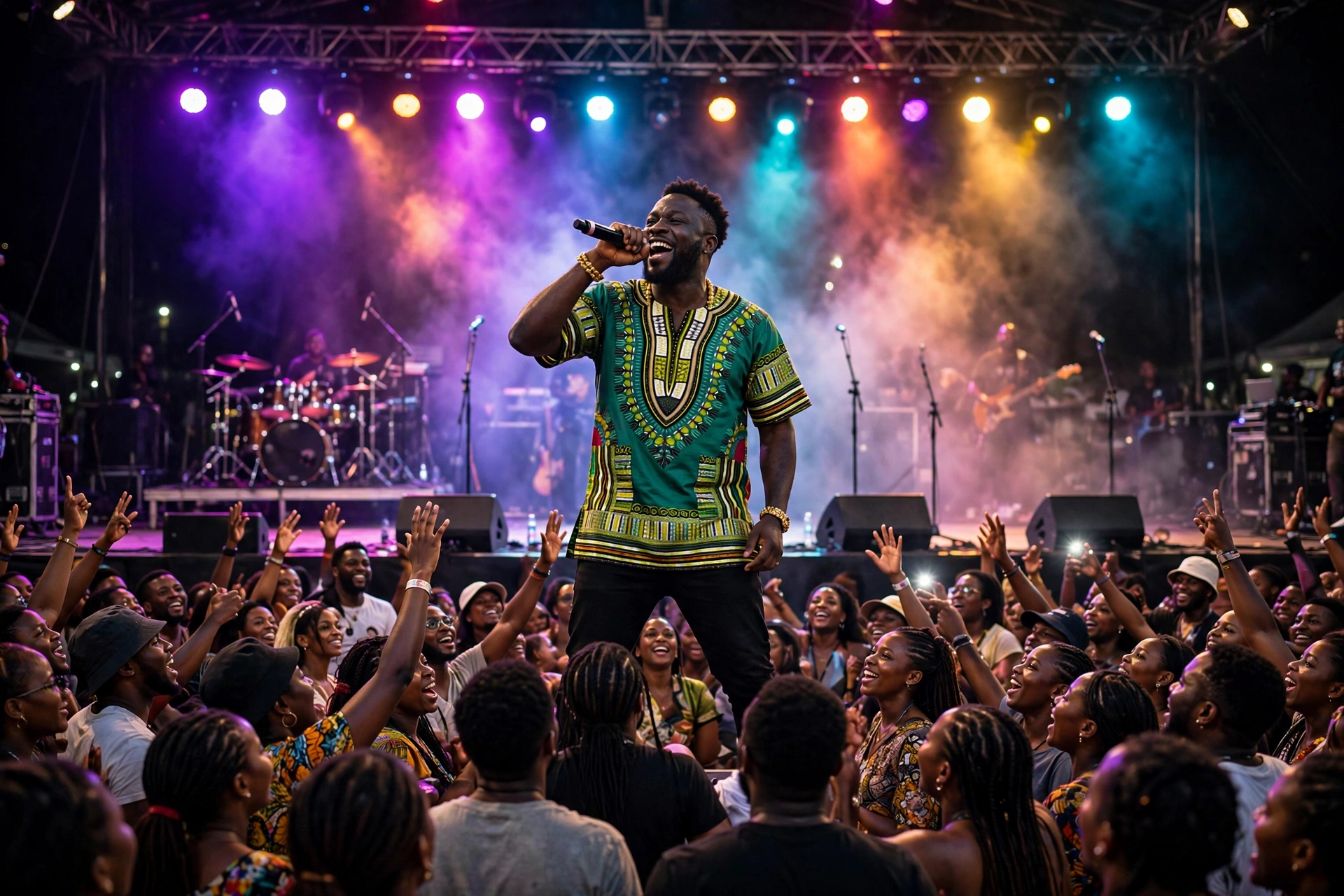
There was a time when a Nigerian hit needed foreign validation to travel. In 2026, the traffic flows the other way: global stars fly to Lagos for features, festival headliners are booked from Surulere to the world, and the sound of the moment — from London to Los Angeles — is unmistakably Afrobeats.
The numbers tell the story. Streaming figures tracked by the IFPI show African music among the fastest-growing catalogues on earth, while Billboard charts that once treated the genre as a curiosity now carry dedicated Afrobeats rankings as a matter of routine.
Built in Lagos, finished everywhere
The takeover was not an accident. Lagos built a hit-making machine: producers who fuse highlife, fuji, hip-hop and dancehall into something instantly recognisable; artists raised on both local street sounds and global pop; and a diaspora that carried the music into every major city before the industry noticed.
Social media did the distribution. Dance challenges turned choruses into global events in days, and Nigerian fans — famously the most loyal on the internet — made sure no release went unnoticed. Our entertainment section has followed each wave of this story as it broke.
More than music
Afrobeats now drags an entire culture with it: Nigerian fashion on global runways, Nollywood collaborations, slang crossing into everyday speech abroad. For young Nigerians, the genre has become proof that home-grown can be world-class without translation.
The business is maturing too. Better label deals, publishing awareness and touring infrastructure mean more of the money stays with the creators — a fight the industry’s biggest names speak about openly.
What comes next
The next frontier is depth: more genres from the continent — alté, amapiano fusions, street-pop — finding global audiences, and a live circuit that treats African cities as headline stops, not afterthoughts. If 2026 is the year Afrobeats conquered the world, the years after will decide who owns the empire.
The sound keeps evolving
What keeps Afrobeats fresh is its refusal to sit still. Producers blend amapiano’s log drums from South Africa, borrow melodies from highlife classics their grandparents danced to, and collaborate across the continent and the diaspora. Each year brings a new rhythmic twist that the world initially calls a subgenre — and by the following year simply calls pop.
The live show has become the genre’s loudest statement. Stadium and arena tours that once routed only through London and New York now sell out across Europe, North America, the Middle East and beyond, with production values matching any global act. Promoters who ignored African music a decade ago now compete for its calendar.
Home is still the headline
For all the global milestones, the culture’s centre of gravity remains Lagos: the studios of the mainland and island, the December party season that draws the diaspora home, and an audience that can make or break a song overnight. Industry watchers note that global success has raised the stakes at home too — better venues, bigger local shows and a new generation of executives determined that the business grows up alongside the music.
The story is still being written, in studios and on stages on every continent. But one thing is settled: the world did not discover Afrobeats in 2026. It simply finished catching up with what Nigeria already knew.
The fans powering it all
Behind every milestone stands the audience. Nigerian fans stream relentlessly, trend hashtags within minutes and defend their favourites with unmatched energy, while the diaspora fills venues abroad and carries the culture into new neighbourhoods. Labels have learned that this fanbase cannot be bought — it must be respected, fed with great music and given reasons to stay proud. As long as that bond holds, the takeover has fuel.
Awards tell a similar story. Categories that once squeezed African music into a single “world” slot have multiplied, and headline slots at the biggest festivals increasingly go to the Lagos sound. The industry is not doing Afrobeats a favour; it is following the audience, and the audience has already decided.
Keep up with every chart move, tour announcement and celebrity moment right here on The Linda Ikeji Blog — where the culture is covered first.